

By Special Correspondent
New Delhi, October 18, 2025. In a boost to India-US economic ties, Union Commerce Minister Piyush Goyal on Friday expressed optimism about ongoing trade negotiations, stating they are progressing in a “very cordial atmosphere.” However, he firmly ruled out any fixed timeline for a final agreement, underscoring that India’s national interests—particularly those of farmers, fishermen, and the MSME sector—must be fully safeguarded. The remarks come against the backdrop of escalating US tariffs on Indian imports, imposed by President Donald Trump, and a recent geopolitical thaw that could fast-track a bilateral trade pact.
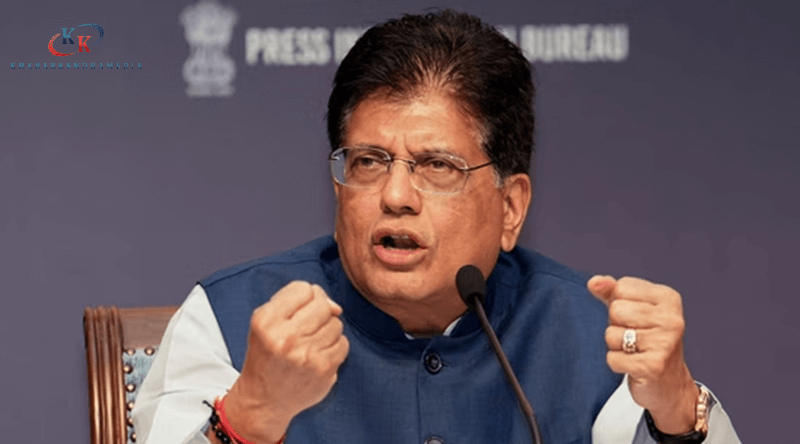
Goyal’s comments were made during a press conference in New Delhi, where he addressed queries on when India might receive “good news” regarding relief from the steep 50% tariffs on its exports to the US. “I believe the talks are progressing in a very cordial atmosphere, and I have said many times that free trade agreements or trade talks are never based on deadlines,” Goyal said, as quoted by ANI. “There is no agreement unless we fully address the interests of the nation—India’s farmers, India’s fishermen, India’s MSME sector. The talks are progressing very well. The talks are ongoing, and we will definitely inform you when we reach a decision.”
The Tariff Standoff: Roots and Recent Shifts
The current US tariffs on Indian goods—comprising a 25% base levy to address what Trump terms a “trade imbalance” and an additional 25% penalty linked to New Delhi’s purchases of Russian oil amid Moscow’s war in Ukraine—stand as one of the highest in the world. This aggressive stance has strained bilateral trade, valued at over $190 billion annually, with India facing potential losses in key sectors like textiles, pharmaceuticals, and gems.
However, a dramatic geopolitical pivot has injected fresh momentum. Following Chinese President Xi Jinping’s regime imposing stricter export controls on rare earth minerals—critical for auto, electronics, and defense industries, where Beijing controls 80% of global supply—Trump threatened a “100% tariff” on China. This “China versus the world” rhetoric has repositioned India as a key US ally. US Treasury Secretary Scott Bessent recently listed India among strategic partners in securing alternative supply chains, a nod to diversifying away from China-dependent networks.
A report by the Global Trade Research Initiative (GTRI) suggests this realignment could expedite a trade deal, with the US potentially offering India tariff access of 16-18%—higher than the 15% granted to the EU and Japan but lower than Vietnam’s 20%. Notably, around 45% of India’s current exports to the US already remain tariff-free, and experts predict sustained growth even amid negotiations.
Trump’s tough posture towards India isn’t purely economic; it’s also tinged with politics. Sources indicate frustration stems from Prime Minister Narendra Modi’s refusal to endorse Trump’s claim that he leveraged tariff threats to broker a ceasefire with Pakistan during India’s “Operation Sindoor” against terror bases in May. Despite this, personal ties remain strong—Trump has called Modi a “great, personal friend,” and the recent visit by US Ambassador-designate Sergio Gor to India included a signed photo from Trump to Modi with the message: “Mr Prime Minister, you are great.”
Negotiations Resume: What’s on the Table?
Talks kicked off in April 2025 but hit a snag in August due to Trump’s tariff escalation. Now, an Indian delegation is in Washington this week for the sixth round of discussions, aiming for a “win-win” outcome. The US is pushing for deeper market access in areas like medical devices, dairy products, and technology services, while India is holding firm on “red lines” in agriculture, digital trade, e-commerce, and intellectual property rights.
Foreign Minister S. Jaishankar has repeatedly emphasized protecting India’s strategic autonomy, cautioning against any anti-China clauses that could limit flexibility. GTRI experts echo this, advising New Delhi to prioritize core interests and avoid concessions that undermine domestic sectors. A successful pact could not only slash tariffs but also bolster joint efforts in critical minerals, reducing mutual reliance on Beijing and enhancing supply chain resilience for global manufacturing.
Government sources remain upbeat, noting that export momentum to the US shows no signs of slowing. “The focus is on a balanced agreement that benefits both economies,” an official told reporters on condition of anonymity. With Diwali festivities underway, the timing feels symbolic—could this mark the “good news” light at the end of the tariff tunnel?
Broader Implications for India-US Trade Relations
A breakthrough deal would signal a maturing partnership amid global uncertainties. For India, it means protecting $120 billion in annual exports while opening doors for US investments in “Make in India” initiatives. For the US, it aligns with Trump’s “America First” agenda by curbing trade deficits and countering China’s dominance. Yet, challenges persist: Balancing Trump’s unpredictability with Modi’s measured diplomacy will be key.
As negotiations intensify, all eyes are on Washington. Will the cordial vibes translate into concrete relief? For now, Goyal’s reassurance offers hope, but India’s negotiators are clear—national interests come first, deadline or no deadline.

